The world of the sea and logistics is at the heart of the Italian Merchant Marine Academy’s activities. But reducing everything to “merely” the development of career paths—even highly specialized ones—is not enough. It is now essential to look far beyond the bow of one’s own ship, because this is a particularly complex historical moment, and because the processes of technical, technological, and digital evolution also require a broader vision.
On top of all this, international politics is no longer the sole domain of analysts. The repercussions of the acute crises in Ukraine, the Red Sea, and the Black Sea, for example, require a broad perspective that ultimately leads to changes in shipping routes, delays and port congestion, and transformations in the supply chain and the shipping industry.
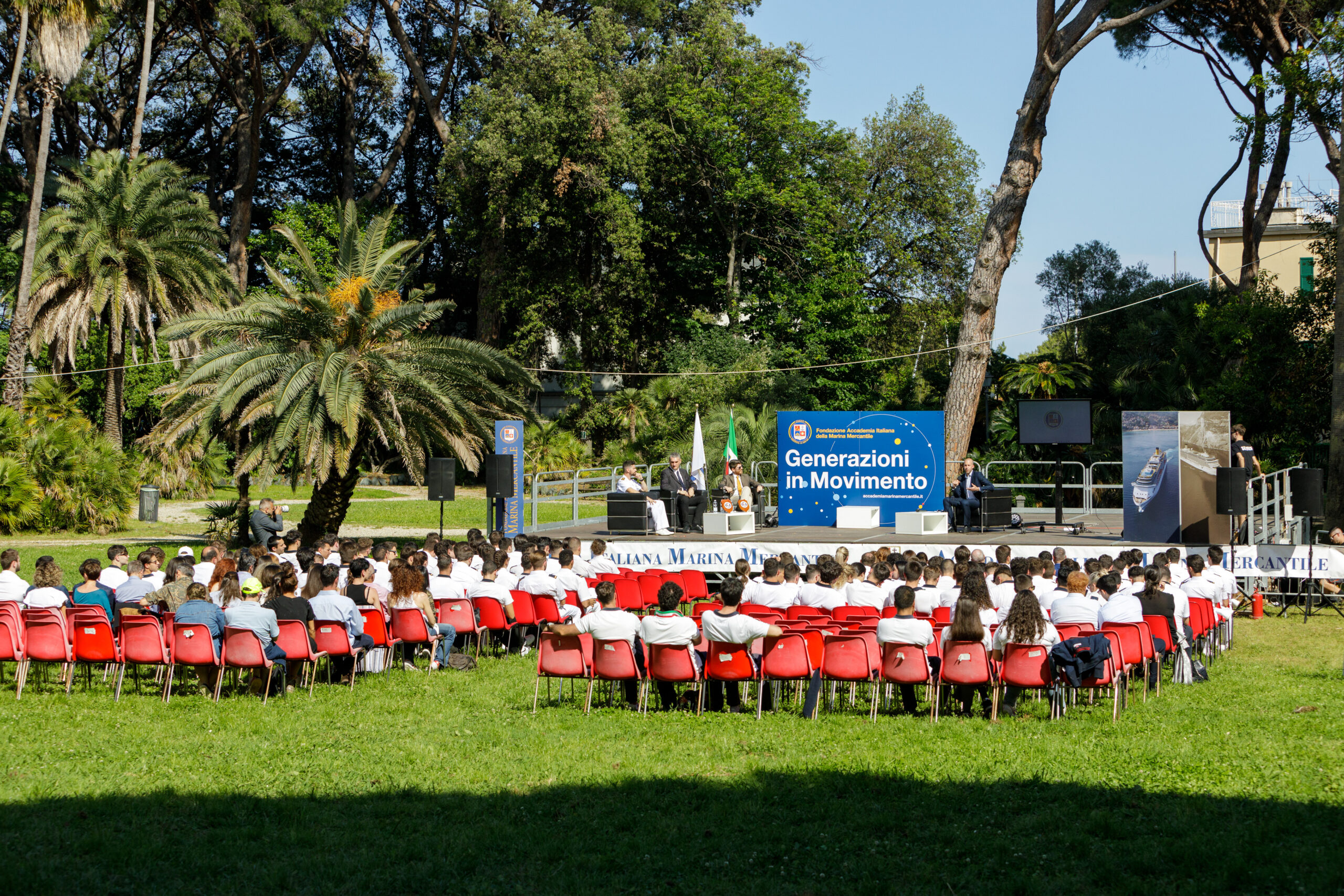
 To better understand all these dynamics, on Tuesday, June 4, the Fondazione Accademia Italiana Marina Mercantile organized “Generations on the Move“, the early-summer event dedicated to in-depth geopolitical and scientific exploration of the seas and oceans around us. Following the official opening remarks by the President Eugenio Massolo, from the General Manager Paola Vidotto and the Mayor of Arenzano, Francesco Silvestrini, a roundtable discussion was held with the three distinguished speakers invited by the Academy.
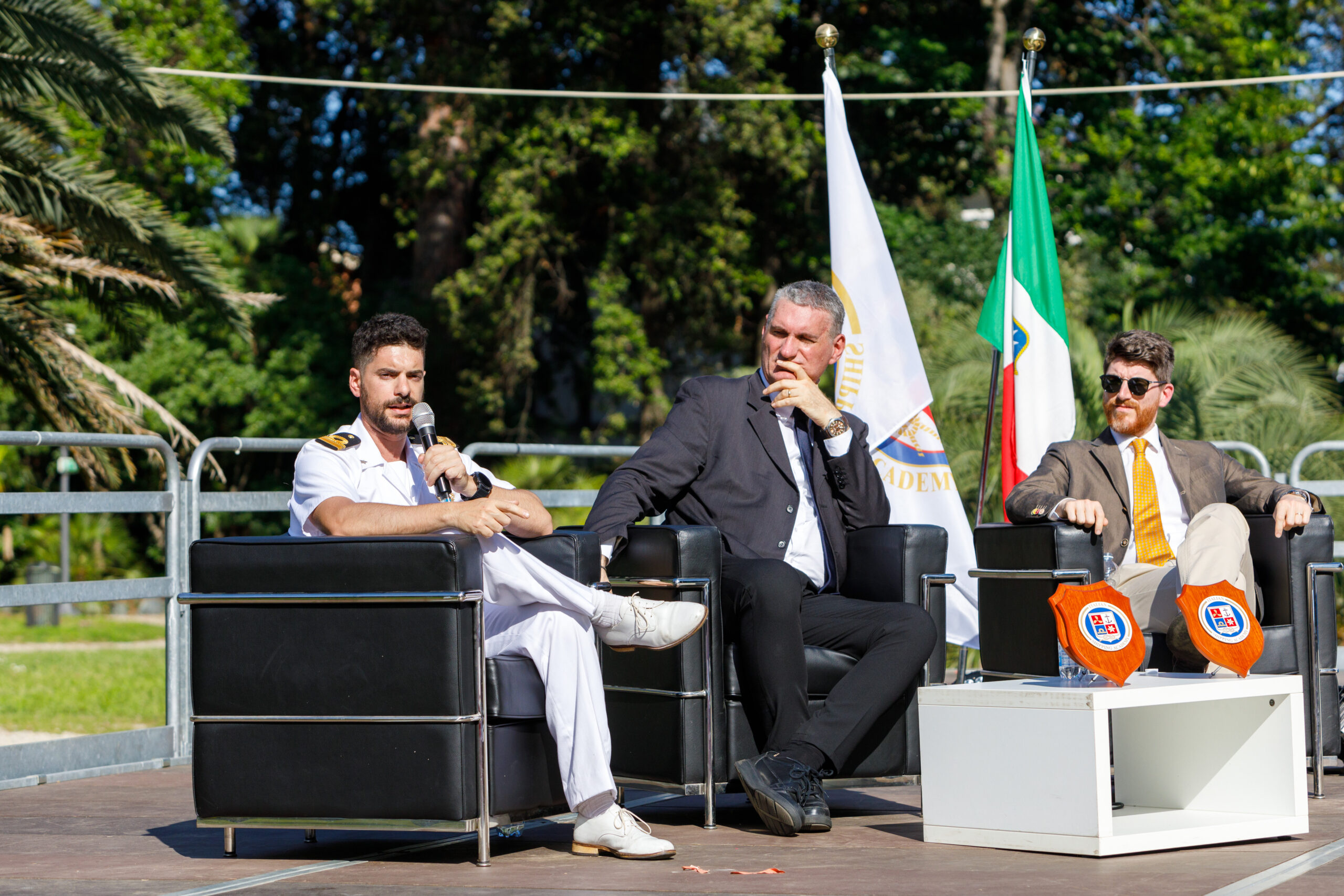 Against the picturesque backdrop of the Villa Figoli des Geneys park, the following performers took the stage one after another Alessandro Panaro, Head of Maritime and Mediterranean Economy at the SRM Research Center, Federico Petroni, Geopolitical Analyst and Academic Coordinator of the Limes School, and the C.C. Samuele Stefanucci, Head of the Oceanographic Office at the Navy Hydrographic Institute. During the meeting, the participants discussed in depth various topics related to the ocean and the current situation it is facing.
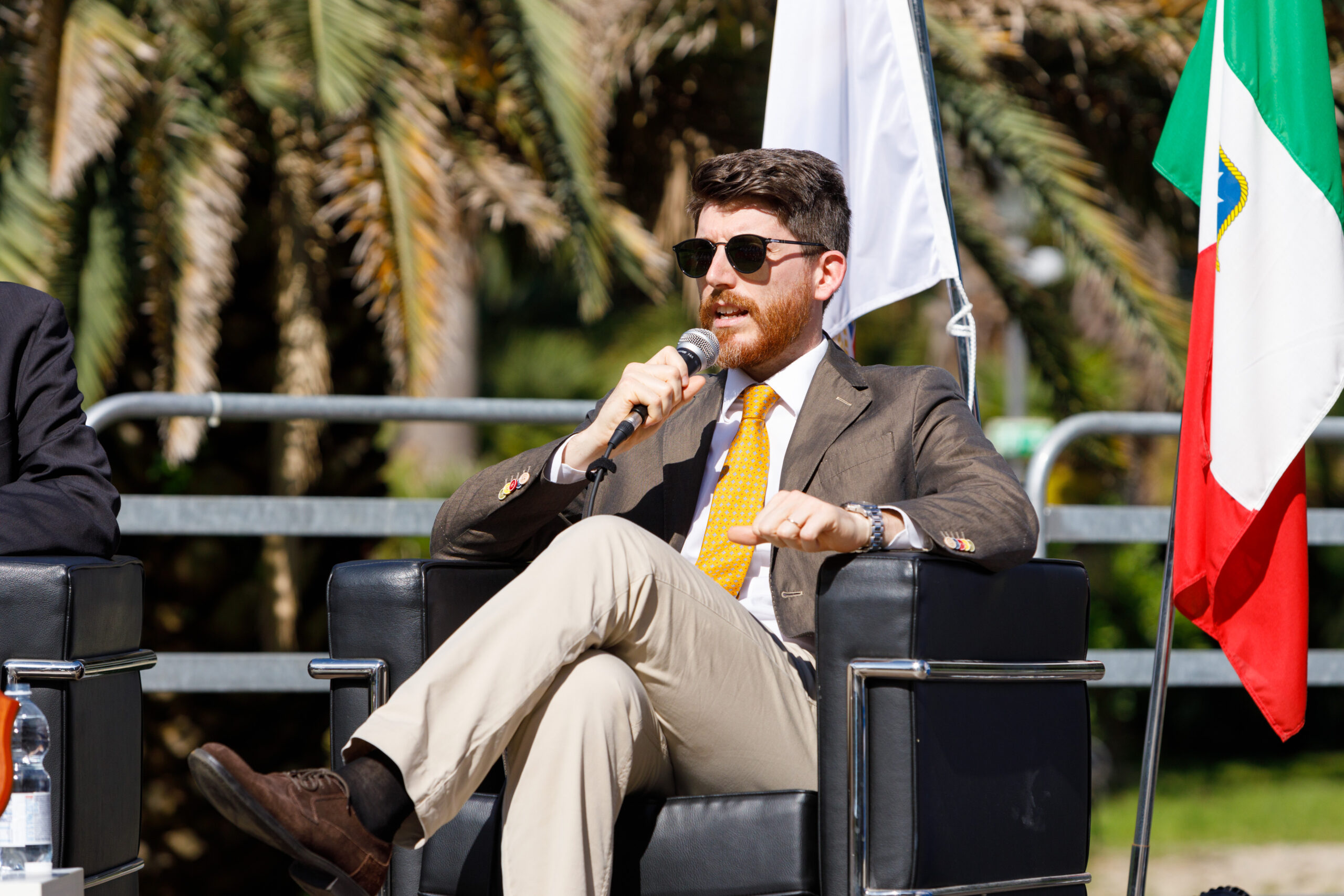
Federico Petroni
Petroni outlined the tensions in the Mediterranean (or “Mediocean,” as it has been renamed by the renowned Italian geopolitical journal to emphasize its centrality among the world’s largest basins), while Panaro successfully translated the political dimension into economic terms, analyzing the current downward trends in Italian port traffic resulting from the insecurity in the Suez Canal. Stefanucci, on the other hand, brought a scientific and research perspective to the event, focusing on the fields of oceanography and bathymetry, and provided a detailed account of the operations carried out by the missions organized by the Hydrographic Institute of Genoa.
To view the speakers' presentations: here